
CAT 2020Slot 1DILRQuestion & Solution
Data Set
Question 1
How many patients were treated with medicine type B?
Solution:
Of the 1000 subjects, only 500 have been considered for the treatment. This constitutes our sample set. Thus the four drugs- A, B, C and D have been administered to this set of 500 individuals, while the rest 500 have been given the placebo. Based on the given information, we can then draw the following 4-set Venn diagram:
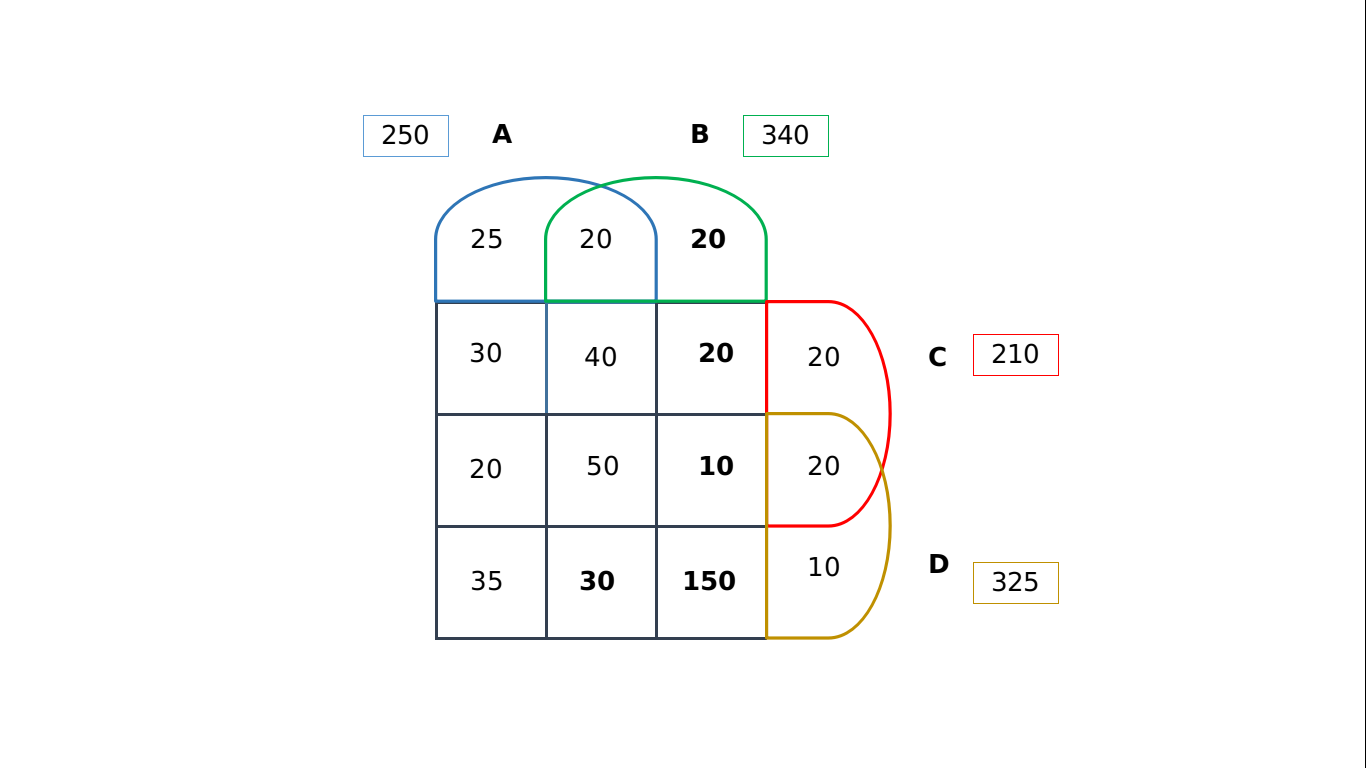
We can solve for the number of patients who were administered the drugs A, B and D excluding C by putting in the values for set A. The required value = 250 - (25+20+30+40+20+50+35) = 30. Based on condition (c), we know that 100 patients were treated with exactly three types of medicines. Thus, we can fill the slot for the number of patients who were administered only B, C and D excluding A by 100 - (40+20+30) = 10.
Similarly, based on condition (f), we know that the candidates who were administered only dug B are 75 - (25+20+10) = 20. Post this, we can easily calculate the number of people administered with only drugs B and C by 210 - (30+20+40+50+10+20+20) = 20. We can fill in the above values to obtain the following diagram:
The sum of all the values should add up to 500. On solving for 'x' [which represents the number of people who were administered drugs B and D only], we obtain x = 150. The final representation would appear as follows:
Based on the above, the number of patients who were treated with medicine type B is equal to 340.
Question 2
The number of patients who were treated with medicine types B, C and D, but not type A was:
Solution:
Of the 1000 subjects, only 500 have been considered for the treatment. This constitutes our sample set. Thus the four drugs- A, B, C and D have been administered to this set of 500 individuals, while the rest 500 have been given the placebo. Based on the given information, we can then draw the following 4-set Venn diagram:
We can solve for the number of patients who were administered the drugs A, B and D excluding C by putting in the values for set A. The required value = 250 - (25+20+30+40+20+50+35) = 30. Based on condition (c), we know that 100 patients were treated with exactly three types of medicines. Thus, we can fill the slot for the number of patients who were administered only B, C and D excluding A by 100 - (40+20+30) = 10.
Similarly, based on condition (f), we know that the candidates who were administered only dug B are 75 - (25+20+10) = 20. Post this, we can easily calculate the number of people administered with only drugs B and C by 210 - (30+20+40+50+10+20+20) = 20. We can fill in the above values to obtain the following diagram:
The sum of all the values should add up to 500. On solving for 'x' [which represents the number of people who were administered drugs B and D only], we obtain x = 150. The final representation would appear as follows:
The number of patients who were treated with medicine types B, C and D, but not type A was: 10.
Question 3
How many patients were treated with medicine types B and D only?
Solution:
Of the 1000 subjects, only 500 have been considered for the treatment. This constitutes our sample set. Thus the four drugs- A, B, C and D have been administered to this set of 500 individuals, while the rest 500 have been given the placebo. Based on the given information, we can then draw the following 4-set Venn diagram:
We can solve for the number of patients who were administered the drugs A, B and D excluding C by putting in the values for set A. The required value = 250 - (25+20+30+40+20+50+35) = 30. Based on condition (c), we know that 100 patients were treated with exactly three types of medicines. Thus, we can fill the slot for the number of patients who were administered only B, C and D excluding A by 100 - (40+20+30) = 10.
Similarly, based on condition (f), we know that the candidates who were administered only dug B are 75 - (25+20+10) = 20. Post this, we can easily calculate the number of people administered with only drugs B and C by 210 - (30+20+40+50+10+20+20) = 20. We can fill in the above values to obtain the following diagram:
The sum of all the values should add up to 500. On solving for 'x' [which represents the number of people who were administered drugs B and D only], we obtain x = 150. The final representation would appear as follows:
The number of people who were administered drugs B and D only were 150.
Question 4
The number of patients who were treated with medicine type D was:
Solution:
Of the 1000 subjects, only 500 have been considered for the treatment. This constitutes our sample set. Thus the four drugs- A, B, C and D have been administered to this set of 500 individuals, while the rest 500 have been given the placebo. Based on the given information, we can then draw the following 4-set Venn diagram:
We can solve for the number of patients who were administered the drugs A, B and D excluding C by putting in the values for set A. The required value = 250 - (25+20+30+40+20+50+35) = 30. Based on condition (c), we know that 100 patients were treated with exactly three types of medicines. Thus, we can fill the slot for the number of patients who were administered only B, C and D excluding A by 100 - (40+20+30) = 10.
Similarly, based on condition (f), we know that the candidates who were administered only dug B are 75 - (25+20+10) = 20. Post this, we can easily calculate the number of people administered with only drugs B and C by 210 - (30+20+40+50+10+20+20) = 20. We can fill in the above values to obtain the following diagram:
The sum of all the values should add up to 500. On solving for 'x' [which represents the number of people who were administered drugs B and D only], we obtain x = 150. The final representation would appear as follows:
The number of patients who were treated with medicine type D was 325.